
Common Problems with Used Cars: What to Watch For Before You Buy
Eduardo Nabut breaks down the most common used-car problems by system — transmission, A/C, brakes, engine — plus brand-specific warnings for Orlando buyers in 2026.
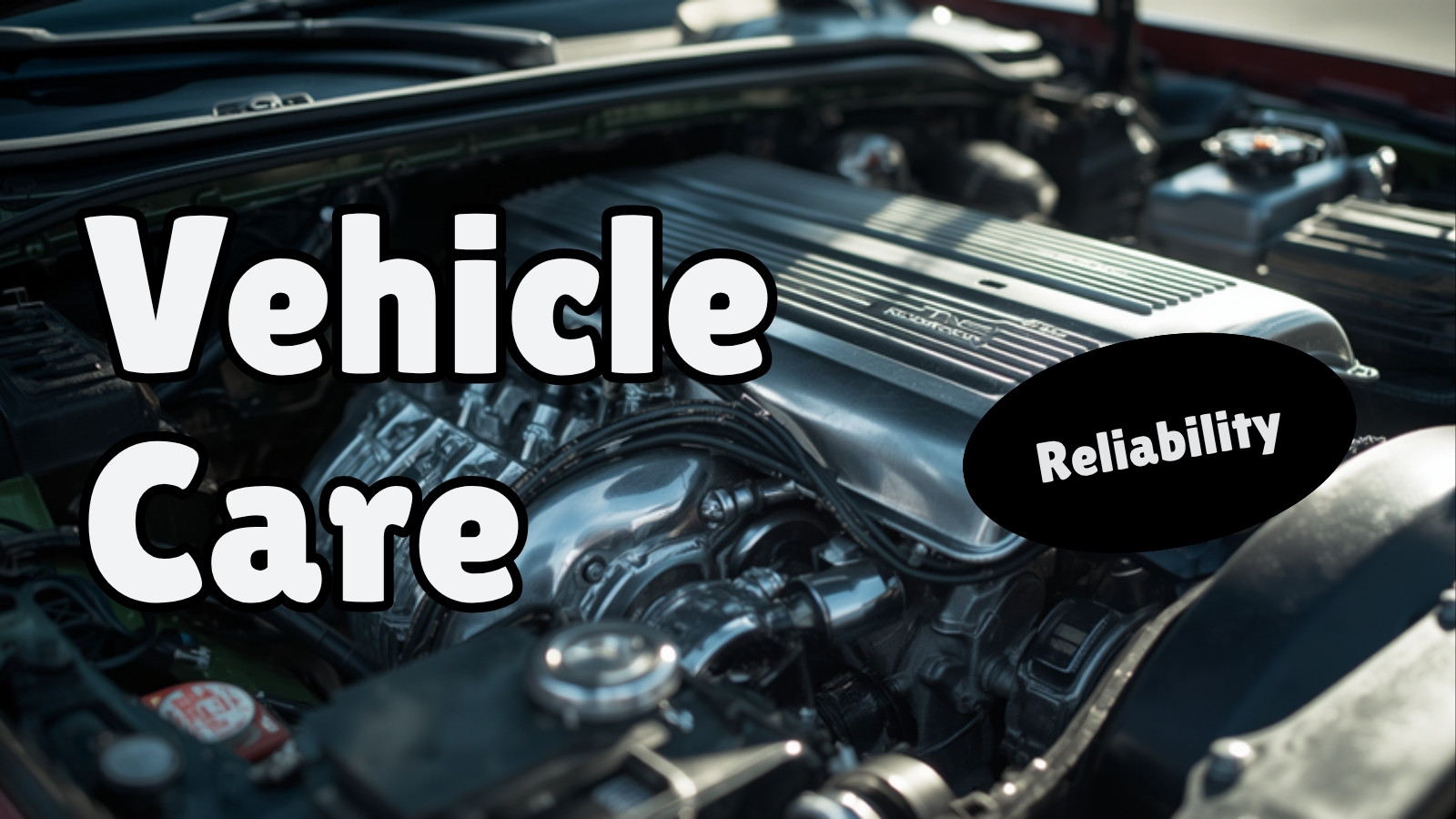
Common Problems with Used Cars: What to Watch For Before You Buy
I have sold more than 4,000 used vehicles in Orlando since 2016. That volume gives me a view most buyers never get: the patterns of what actually breaks, on which models, and at what mileage. After enough time in this business, you stop being surprised — you just start seeing problems earlier.
This guide is my attempt to hand you that pattern recognition before you sit across from a seller. We will go system by system — transmission, air conditioning, suspension, brakes, engine oil consumption, timing components, and electronics — with specific brand warnings and realistic repair budgets for the Central Florida market. Then I will show you how a VIN report and a pre-purchase inspection protect any purchase, regardless of where you buy.
Why Every Used Car Has Some Problems — and Why That Is Not the Point
Every used car has wear. The question is never "does this car have any issues?" because the answer is always yes, to some degree. The right question is: which issues does this specific car have, how serious are they, and what will they cost to correct?
Buyers who understand this frame make smarter decisions. A Toyota Corolla with 135,000 miles that needs new struts is still a far better purchase than a lesser model with 70,000 miles concealing an undiagnosed transmission problem. The issue is not mileage — it is which system is failing and what it costs to fix before or after the sale.
Most Common Used-Car Problems by System
1. Transmission: The Repair That Can Total a Used Car
A failed transmission on a $9,000 vehicle can cost more than the car is worth. At $2,000 to $5,500 for a rebuild or replacement in the Orlando market, it is the single repair most likely to end a used-car purchase economically. This is the system I evaluate first on any vehicle over 100,000 miles.
CVT transmissions deserve extra caution. Continuously variable transmissions are standard on all modern Nissans — Altima, Sentra, Rogue, Murano, Pathfinder — and appear on Honda Civics and CR-Vs from 2015 onward and certain Jeep Cherokee models. When fluid is changed on schedule (every 30,000 to 45,000 miles), CVTs are smooth and efficient. When that service is skipped, internal belt and pulley wear accelerates dramatically.
On any used Nissan, ask immediately for documented CVT fluid change records. If the seller cannot produce them, assume the CVT has never been serviced. A CVT past 120,000 miles without documented maintenance is a serious risk. Watch for: shuddering at low speeds, hesitation when pulling away from a stop, and a droning or whining noise at highway speed under load.
For conventional automatics: check for delayed shifts, slipping between gears, or fluid on the dipstick that is dark brown and smells burnt. Budget $2,000–$4,000 for a conventional automatic rebuild; CVT replacement runs $3,000–$5,500 in Central Florida.
2. Air Conditioning: Non-Negotiable in Central Florida
In most states, this would be a secondary concern. In Orlando, a broken AC system is a health issue. Summer temperatures inside a parked car with windows up can exceed 130°F within minutes. A system that cannot reach 45–50°F at the dashboard vents in July is not functional — it is a liability.
Test procedure: engine running, recirculation on, maximum cold, windows up, in the shade for five full minutes. If it takes longer than five minutes to get genuinely cold, or if it cools initially and then fades, there is a problem worth diagnosing before purchase.
Common failures: refrigerant leak at a hose fitting, Schrader valve, or evaporator core; failed compressor clutch or compressor body; clogged condenser from road debris; or a failed blend door actuator that prevents the airflow from switching fully to cold. Repair costs range from $200 for a minor leak repair and recharge up to $1,800–$2,500 for a full compressor replacement and system flush. Never accept "it just needs a recharge" without finding where the refrigerant went. Properly sealed systems do not lose charge.
3. Suspension and Struts
Struts and shock absorbers wear so gradually that most drivers never notice until a mechanic points it out. By 80,000 to 100,000 miles, most original struts are due for replacement. Florida's surface roads — particularly the pothole-heavy secondary roads around Orlando — accelerate this wear.
Signs of worn suspension: the car bounces excessively over bumps and does not settle quickly; a clunking sound from the front corner over speed bumps or rough pavement; the nose dives sharply under braking; or uneven tire wear where one edge is significantly more worn than the other. Uneven tire wear almost always means the alignment cannot be corrected because worn suspension components allow too much movement.
Budget $600–$1,200 for a full four-corner strut replacement at an independent shop. Ball joints, control arm bushings, and tie rod ends wear alongside struts in high-mileage vehicles — budget an additional $200–$600 if those need replacement at the same time.
4. Brakes
Brake pads and rotors are consumables — they are designed to wear. The problem in the used-car market is that many sellers defer brake work as long as possible to cut costs, and buyers inherit the deferred maintenance.
Before any test drive, inspect pad thickness through the wheel spoke. If less than one-quarter inch of pad material is visible, replacement is immediate. On the test drive, brake firmly once from highway speed. Pedal vibration or pulsation means the rotors are warped. Grinding — the sound of metal on metal — means pads are gone and the rotors are being damaged with every stop. Budget $250–$550 per axle for a complete job with quality pads and new rotors rather than a resurface, which rarely lasts as long on a high-mileage vehicle.
5. Engine Oil Consumption
Some engines consume oil between changes as a documented characteristic — and the problem worsens with age and mileage. Toyota's 2AZ-FE four-cylinder (2007–2011 Camry and Corolla), certain Subaru EJ-series engines, BMW N20 and N54 turbocharged engines, and some Volkswagen 2.0T engines are known consumers. A quart per 3,000 miles may still fall within a manufacturer's tolerance, but at high mileage, consumption can accelerate past any acceptable range.
During your inspection, check the dipstick with the engine cold and the car parked on level ground. Oil should sit between the MIN and MAX marks. Significantly below MIN means either the owner has not been monitoring it or consumption is already heavy. Oil that looks black and tarry indicates very long change intervals. Unchecked oil consumption leads to engine damage costing $3,000–$8,000 or more.
6. Timing Components: Belt vs. Chain
Many engines use a rubber timing belt that must be replaced on a schedule — typically every 60,000 to 100,000 miles depending on the manufacturer. If the belt snaps without having been replaced, valves and pistons collide and the engine is typically destroyed. Honda four-cylinder engines pre-2012 (Accord, CR-V), many Hyundai and Kia engines pre-2011, and older Mazda engines use timing belts. Always ask specifically whether the belt has been replaced and request the service receipt as documentation.
Timing chains are marketed as lifetime components, but this is not literally true. The Hyundai Theta II 2.0L and 2.4L engines — used in the Sonata, Optima, Santa Fe Sport, and Tucson across certain model years from 2011 to 2019 — have documented chain tensioner failures and connecting rod bearing failures that can cause catastrophic engine seizure with little warning. These engines are subject to ongoing NHTSA recall actions. Budget $600–$1,200 for a timing belt replacement service; chain tensioner issues start around $800 and climb from there.
7. Electronics and Sensors
Modern used cars arrive with a variety of stored fault codes triggering dashboard warnings: tire pressure (TPMS), antilock brakes (ABS), oxygen sensors, mass airflow sensors, and crankshaft or camshaft position sensors, among others. Individual sensors are typically inexpensive — $80 to $250 parts and labor at most independent shops. The concern arises when multiple simultaneous codes appear across unrelated systems, which can signal deeper electrical problems, a deteriorating ECU, or wiring damage from a previous flood event.
Before any purchase, have the OBD-II port scanned — any auto parts store does this free. A single stored code for a known minor sensor is a negotiating point. Multiple active codes across different systems is a reason to walk.
Brand-Specific Warnings for the 2026 Orlando Market
Hyundai and Kia: Theta II Engine Recalls
Certain 2011–2019 Hyundai and Kia models with the Theta II GDI or MPI 2.0L and 2.4L engines are subject to extensive NHTSA recalls covering connecting rod bearing failure and manufacturing metal debris left in oil passages during assembly. Affected models include the Sonata, Optima, Santa Fe Sport, and Tucson. In the most serious cases, engines seize while driving at highway speed. Before buying any used Hyundai or Kia in this engine family, run the VIN through our free VIN check tool and through NHTSA.gov. Open recalls transfer with the title and must be completed free at any authorized dealer.
Ford EcoBoost 1.5L: Coolant Intrusion Problem
The 1.5L EcoBoost engine in the 2013–2018 Ford Fusion and 2013–2017 Ford Escape has a documented cylinder head design flaw that allows coolant to enter the combustion chamber. Symptoms: white smoke at startup, a sweet smell from the exhaust, or the coolant reservoir depleting without visible external leaks. If left uncorrected, the engine can hydro-lock, requiring full replacement at $3,000–$7,000. The 2.5L naturally aspirated and 2.0L EcoBoost versions of the Fusion and Escape do not share this specific defect. Choose those engines when buying these models used.
Nissan CVT: The Single Most Consequential Warning in This Guide
A high-mileage Nissan with a CVT and no documented fluid service history is a vehicle to approach with extreme caution. Nissan extended CVT warranties to 10 years or 120,000 miles on certain model years — but a large share of used Nissans in Orlando today have passed those thresholds. Fluid breakdown accelerates internal wear on the steel belt and variator pulleys until the transmission fails entirely. A CVT replacement for a Nissan Altima or Sentra runs $3,500–$5,500 in the local market. The question is not whether an unserviced high-mileage CVT will fail — it is when.
Two Steps That Protect Every Used-Car Purchase
Step one — run the VIN before you drive anywhere. Our free VIN history report at /tools/vin-check returns accident records, title status (clean, salvage, rebuilt, or flood-damaged), odometer disclosures, and open NHTSA recall data. This takes two minutes and costs nothing. Do it before you invest time and emotional energy in any vehicle.
Step two — get a pre-purchase inspection. For any car you are seriously considering, pay an independent mechanic $100–$150 to inspect every system: engine, transmission fluid condition, brake lining thickness, suspension wear, AC system pressure test, and all OBD-II codes stored or active. A good PPI also covers a visual inspection on the lift for leaks and structural damage. Any legitimate seller will allow this. A seller who refuses is telling you something critical about the vehicle they are selling.
At Next Gear Remarketing, every vehicle goes through our own multi-point inspection before it reaches the lot. We still encourage every buyer to arrange an independent PPI — because confidence built on verification is the only confidence that holds up after the purchase.
FAQ
What are the most expensive repair problems to watch for in a used car?
Transmission failure is the costliest single repair, ranging from $2,000 for a conventional rebuild to $5,500 for a CVT replacement. Engine failure from neglected timing components or chronic oil starvation runs $3,000–$8,000 or more. Air conditioning compressor failure in Central Florida typically costs $1,200–$2,500 fully serviced. These three categories account for the overwhelming majority of buyer regrets after purchase.
Are CVT transmissions reliable in used cars?
They can be reliable when fluid is changed every 30,000 to 45,000 miles. The problem is that most owners do not know CVT fluid needs to be changed, so most used CVTs have never been serviced. Nissan CVTs are the highest-risk in the Orlando used-car market at high mileage. Honda CVTs (Civic and CR-V from 2015 onward) and Subaru lineartronic CVTs have better track records when properly maintained. Always require documented fluid change history before buying any used car with a CVT.
How do I find open recalls on a used car before buying?
Enter the 17-digit VIN at NHTSA.gov (free government database) or use our VIN check tool. Open safety recalls must be completed free of charge at any authorized dealer for any owner — they do not expire and they transfer with the vehicle. The most consequential active recalls for used cars in the 2026 Orlando market are the Hyundai and Kia Theta II engine recalls and various Ford structural and airbag recalls.
Is a pre-purchase inspection worth the cost on a used car?
Every time, without exception. A $100–$150 inspection has revealed $2,000 to $8,000 in needed repairs on vehicles that looked clean on the surface more times than I can count in this business. Even when the car passes completely clean, you leave with documented assurance instead of hope. Any seller — private or dealer — who refuses a pre-purchase inspection is signaling that the vehicle does not hold up to scrutiny.
What used cars have the fewest major problems in the Orlando market?
In my experience across more than 4,000 transactions, the Toyota Corolla (2012–2020), Honda Civic (2012–2019), Toyota Camry four-cylinder (2012–2019), and Mazda3 (2014–2022) consistently show the lowest rate of major mechanical failure at the mileage levels typical of the Orlando used-car market. Parts are inexpensive and widely available, independent mechanics know these platforms well, and service intervals are well-documented and easy to verify.
Buy Any Used Car with Confidence
The buyers who come back satisfied are the ones who did the work: ran the VIN, got the pre-purchase inspection, asked about maintenance history, and evaluated each system before falling in love with the exterior. The buyers who call with frustration are the ones who skipped the steps.
At Next Gear Remarketing, every vehicle we sell goes through our multi-point inspection before it reaches the lot. Every price includes tax, tag, title, and dealer fee — no surprises at the finance desk, as required by Florida law (F.S. 501.976). Browse our current inventory — fully transparent pricing, updated daily.
Not sure about financing? We offer in-house financing for every credit background: good credit, bad credit, no established credit, and ITIN buyers from our Hispanic, Brazilian, and Haitian communities. Apply here — soft pull, no impact to your credit score.
Before buying any car, anywhere, run our free VIN history report. Two minutes, no cost, and the answers it returns are the most important ones to have before you commit.
Find us at 5130 Old Winter Garden Rd, Orlando FL 32811. Call or text (407) 434-1330 or (321) 662-7194. We serve our customers in English, Español, Português, and Kreyòl.
— Eduardo Nabut, Owner, Next Gear Remarketing
Looking for a quality used car in Orlando?
We've helped the Brazilian, Hispanic and English-speaking communities find reliable vehicles for over 14 years.
Continue reading
Best Used Cars for Florida's Heat and Humidity (2026 Buyer's Guide)
After ten years selling used cars in Orlando, I can tell you: Florida's heat separates the cars that last from the ones that quietly fall apart — here is what to buy and exactly what to inspect.
How Much Should I Budget for Used Car Maintenance in Florida? (2026 Guide)
One question I hear just as often as 'what car should I buy' is 'how much will it cost me after I drive it off the lot?' Here are the real numbers for Orlando, broken down so you can plan before you buy.

How to Avoid High-Interest Used Car Loans in Orlando (2026 Guide)
The price of the car is only half the story — the interest rate is where most buyers quietly overpay by thousands. Here is exactly how rates are set and what you can do to push yours lower.